
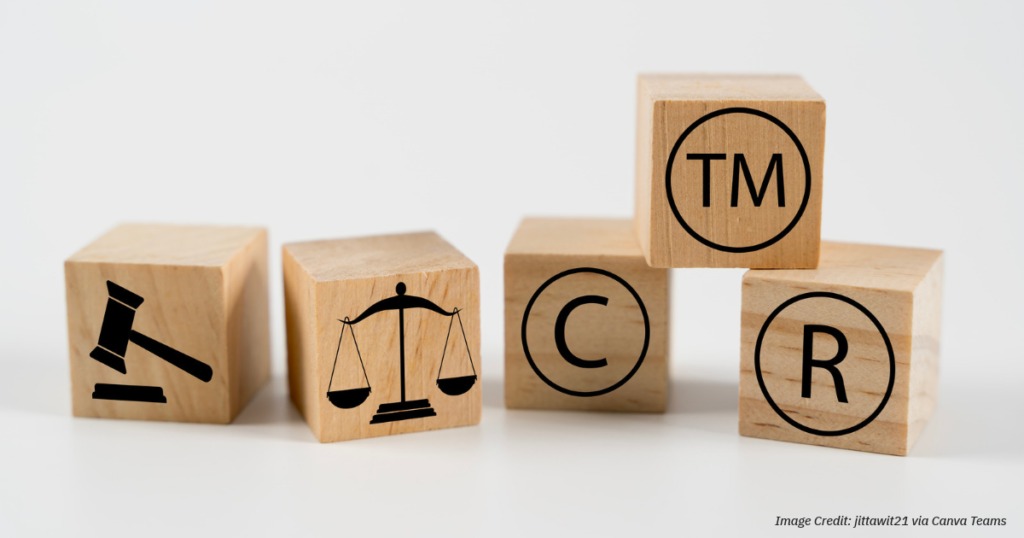
With access to modern technology and social media, anyone and everyone can create and establish their presence online – and profit from it.
Branding is everything especially when your competition could be anyone from your next-door neighbor to someone from the other side of the world. But what happens when someone comes up with the same idea as you? How do you protect your idea? And what if you discover that someone is using your art or your ideas without your permission or giving you credit?
Imagine working hard for months or even years and investing a lot of money to build a brand for your business – creating logos, packaging, signages, and developing a website – only to find out someone beat you to registering the name and mark you planned to use. How will you feel about being forced to start again from scratch?
Or worse, imagine discovering your business name and logo being used for inferior quality or defective products, leaving you to take the fall for someone else’s faulty and substandard products. How do you hold the culprits accountable? What steps do you even take to stop the damage and restore your business’ image and reputation?
You might be a creative professional – an artist, a designer, or a craftsperson – or an entrepreneur trying to ensure all your ideas, your trade name, goods, and/or services are protected. Whatever your field, perhaps it is time to take a proactive approach in safeguarding your ideas and investing in intellectual property protection.
What is Intellectual Property?
“Intellectual Property” refers to creations of the human mind which are protected under the law, particularly under Republic Act (R.A.) 8293 or the Intellectual Property Code of the Philippines. According to this law, the term “Intellectual Property” consists of: Copyright, Trademarks and Service Marks, Geographic Indications, Industrial Designs, Layout Designs (Topographies) of Integrated Circuits, and Protection of Undisclosed Information.
Is my brand considered Intellectual Property?
A “brand” may be considered as Intellectual Property depending on what “brand” or “branding” refers to in your business or profession. If you are referring to the overall identity and reputation associated with a business, product, or service in general or as a whole – there is no specific category that such a broad concept of “brand” can be placed under. However, your business’ brand name, logo, slogan, symbol, or even the distinct shape or design of its packaging, such as cases or bottles, may each be protected by law.
If you are referring to a distinctive name, mark, or logo that identifies your business or trade, it can be protected as a trademark under the law. R.A. 8293 defines a “Mark” as “any visible sign capable of distinguishing the goods (trademark) or services (service mark) of an enterprise”.
What is the difference between a Trademark, a Copyright, and a Patent?
To put it simply, Copyright refers to Literary and Artistic Works and are protected at the moment of their creation; Patent refers to any technical solution of a problem in any field of human activity which is new, involves an inventive step, and is industrially applicable; and Trademark refers to any visible sign capable of distinguishing the goods (trademark) or services (service mark) of an enterprise.
What Trade Names or Trademark can I use?
You can use any name or mark you deem appropriate for your business, as long as it is not considered as “unregistrable” under appropriate laws. Section 123 of R.A. 8293 provides the “registrability” of a mark. It states that a mark cannot be registered if it:
-
- (a) Consists of immoral, deceptive or scandalous matter, or matter which may disparage or falsely suggest a connection with persons, living or dead, institutions, beliefs, or national symbols, or bring them into contempt or disrepute;
-
- (b) Consists of the flag or coat of arms or other insignia of the Philippines or any of its political subdivisions, or of any foreign nation, or any simulation thereof;
-
- (c) Consists of a name, portrait, or signature identifying a particular living individual except by his written consent, or the name, signature, or portrait of a deceased President of the Philippines, during the life of his widow, if any, except by written consent of the widow;
-
- (d) Is identical with a registered mark belonging to a different proprietor or a mark with an earlier filing or priority date, in respect of:
- (i) The same goods or services, or
- (ii) Closely related goods or services, or
- (iii) If it nearly resembles such a mark as to be likely to deceive or cause confusion;
- (d) Is identical with a registered mark belonging to a different proprietor or a mark with an earlier filing or priority date, in respect of:
-
- (e) Is identical with, or confusingly similar to, or constitutes a translation of a mark which is considered by the competent authority of the Philippines to be well-known internationally and in the Philippines, whether or not it is registered here, as being already the mark of a person other than the applicant for registration, and used for identical or similar goods or services: Provided, That in determining whether a mark is well-known, account shall be taken of the knowledge of the relevant sector of the public, rather than of the public at large, including knowledge in the Philippines which has been obtained as a result of the promotion of the mark;
-
- (f) Is identical with, or confusingly similar to, or constitutes a translation of a mark considered well-known in accordance with the preceding paragraph, which is registered in the Philippines with respect to goods or services which are not similar to those with respect to which registration is applied for: Provided, That use of the mark in relation to those goods or services would indicate a connection between those goods or services, and the owner of the registered mark: Provided further, That the interests of the owner of the registered mark are likely to be damaged by such use;
-
- (g) Is likely to mislead the public, particularly as to the nature, quality, characteristics or geographical origin of the goods or services;
-
- (h) Consists exclusively of signs that are generic for the goods or services that they seek to identify;
-
- (i) Consists exclusively of signs or of indications that have become customary or usual to designate the goods or services in everyday language or in bona fide and established trade practice;
-
- (j) Consists exclusively of signs or of indications that may serve in trade to designate the kind, quality, quantity, intended purpose, value, geographical origin, time or production of the goods or rendering of the services, or other characteristics of the goods or services;
-
- (k) Consists of shapes that may be necessitated by technical factors or by the nature of the goods themselves or factors that affect their intrinsic value;
-
- (l) Consists of color alone, unless defined by a given form; or
-
- (m) Is contrary to public order or morality.
When can I register a Trademark?
You can register the mark you are using or register any mark that you intend to use in the near future as long as they are considered “registrable” under the law and provided that the said use does not or will not prejudice another party or individual.
How do I register my Trademark?
Once you have identified the appropriate classification of your trademark and confirmed its registrability, you may proceed with the trademark registration process. You may file your trademark application through the Intellectual Property Office of the Philippines (IPOPHL) either directly or through an authorized agent.
After your application is submitted, the IPOPHL will evaluate your trademark if it qualifies for registration. Once your application is approved and your mark is successfully registered, you will obtain the rights associated with your registered trademark.
What happens after I register my Trademark?
Protecting your mark does not end upon its registration. It should be regularly monitored, properly maintained, and renewed with the IPOPHL in accordance with R.A. 8293.
Can I authorize a representative to handle the registration and protection of my marks with the IPOPHL?
Yes. You may personally handle the registration and ‘maintenance’ of your marks or you can designate an authorized representative to handle the process seamlessly on your behalf.
Disclaimer: These FAQs provide general information only and is not a substitute for legal advice. For further information and guidance, please feel free to contact our office.